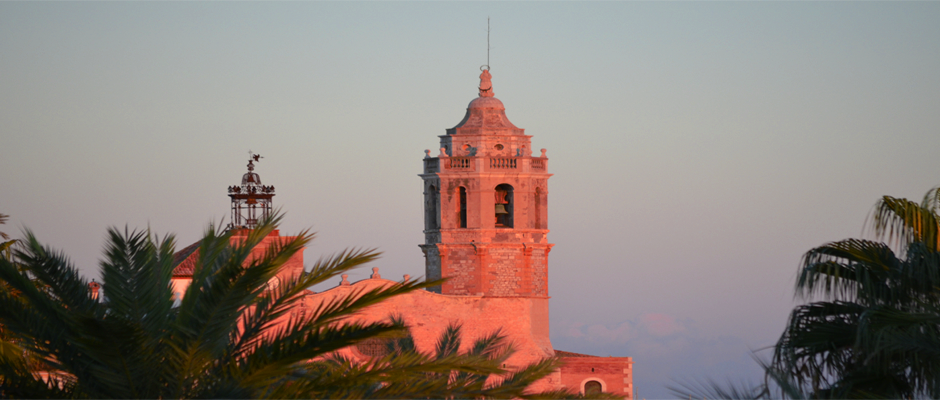
The
Church of Sant Bartomeu i Santa Tecla, popularly known as “La Punta” (The Point), is the most iconic landmark in Sitges. Perched on a rocky outcrop overlooking the Mediterranean Sea, it serves as the symbolic divide between the town’s main promenade and its smaller northern beaches.
Why It’s Called “La Punta”
The nickname “La Punta” refers to its prominent geographic location on a headland that juts into the sea at the end of the town’s seafront promenade. Its elevated position at Plaça del Baluard makes it visible from almost anywhere along the Sitges coastline.
Architecture and History
- Structure: Built primarily in the 17th century, the church features a distinct asymmetrical silhouette with two bell towers: the taller octagonal belfry (consecrated in 1672) and a smaller “conjuratory” tower that houses the city clock.
- Style: While it has Gothic origins dating back to the 14th century, its current form is a stunning example of Catalan Baroque architecture.
- Interior Highlights:
- Baroque Altarpieces: It houses one of Catalonia’s most significant collections of 17th-century polychrome wood altarpieces.
- The Organ: A highly valued baroque organ dating from 1699 is still used for concerts and services.
- Treasury Room: A small museum area containing sacred items like the silver sanctuary and the Corpus Christi monstrance.
Visitor Information for 2026
- Opening Hours: Typically open for visitors from 10:00 AM – 1:00 PM and 4:00 PM – 7:00 PM. Access may be restricted during religious services.
- Mass Schedule:
- Monday – Saturday: 7:30 PM.
- Sunday: 9:00 AM, 11:00 AM (Spanish), 12:30 PM, and 7:30 PM.
- Cost: Entry to the main church is generally free; however, guided tours that include the bell tower typically require a paid ticket.
- Location: Plaça de l’Ajuntament, 20, 08870 Sitges.
Cultural Significance
The church is the heart of Sitges’ major festivals. It plays a central role during the Festa Major (August 24, Sant Bartomeu) and the Santa Tecla festival (September 23), where traditional dances and fire runs (correfocs) often begin or end at its iconic steps.
About The Author
